Final settlement is everything you owe a leaver on their last day: salary earned, any notice pay, accrued leave the contract says you pay for, and any benefit promised in writing, less lawful deductions. The numbers come from the contract and the reason for leaving, not from a single legal formula. The example below shows a resignation worked through to the net amount, with PAYE and pension calculated.
What goes into final pay
- Salary earned to the last day. Include allowances, overtime and commission earned but not yet paid.
- Notice. If the employee works the notice period, pay continues as normal. If you end the job without notice, pay in lieu of notice is due. The minimums are in our guide to termination notice.
- Untaken annual leave. The Labour Act sets only a floor of 6 working days after 12 months, so whether untaken days are paid out is usually a contract or policy question. See how leave entitlements work.
- Redundancy, gratuity or end-of-service pay. Only where the contract, policy or a redundancy process provides it. Severance is not automatic. For redundancy, read how to do it lawfully.
- Earned bonuses and approved expense claims. Pay what the plan or contract already makes due.
On the other side go PAYE, the employee's 8% pension contribution on the final salary, and any loan or advance balance covered by a signed agreement. Unreturned property is deductible only where you have a lawful basis and the employee's written consent. The limits are in our note on lawful deductions.
Worked example: a resignation at month end
Kemi earns ₦360,000 gross a month, with the whole amount treated as pensionable. She resigns, works her notice and leaves on 31 October. She has 7 untaken leave days that the company policy pays out, and a ₦40,000 salary advance balance under a signed agreement.
Pension: 8% of ₦360,000 = ₦28,800. Chargeable income for the year at her normal pay is ₦4,320,000 less ₦345,600 pension = ₦3,974,400, which sits in the 18% band. Normal monthly PAYE is ₦505,392 divided by 12 = ₦42,116.
Leave pay: ₦360,000 divided by 30 days, times 7 = ₦84,000. It is taxable employment income, so it falls in the 18% band: ₦84,000 x 18% = ₦15,120 extra PAYE. We assume leave pay is not pensionable; confirm that with your PFA.
Total PAYE for October: ₦42,116 + ₦15,120 = ₦57,236.
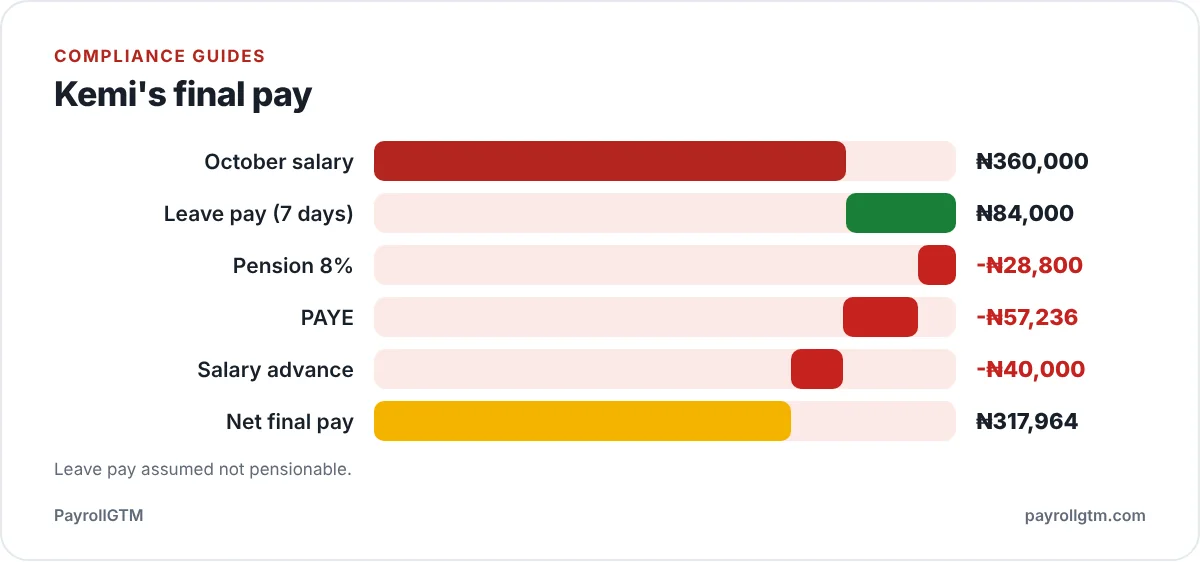
The final net is ₦360,000 + ₦84,000 - ₦28,800 - ₦57,236 - ₦40,000 = ₦317,964. The daily rate (monthly pay divided by 30) is a simplification. Your policy may divide by working days instead. Choose one method and use it for every leaver. If someone leaves part way through a month, the proration guide covers the calendar-day and working-day methods.
The exit steps in order
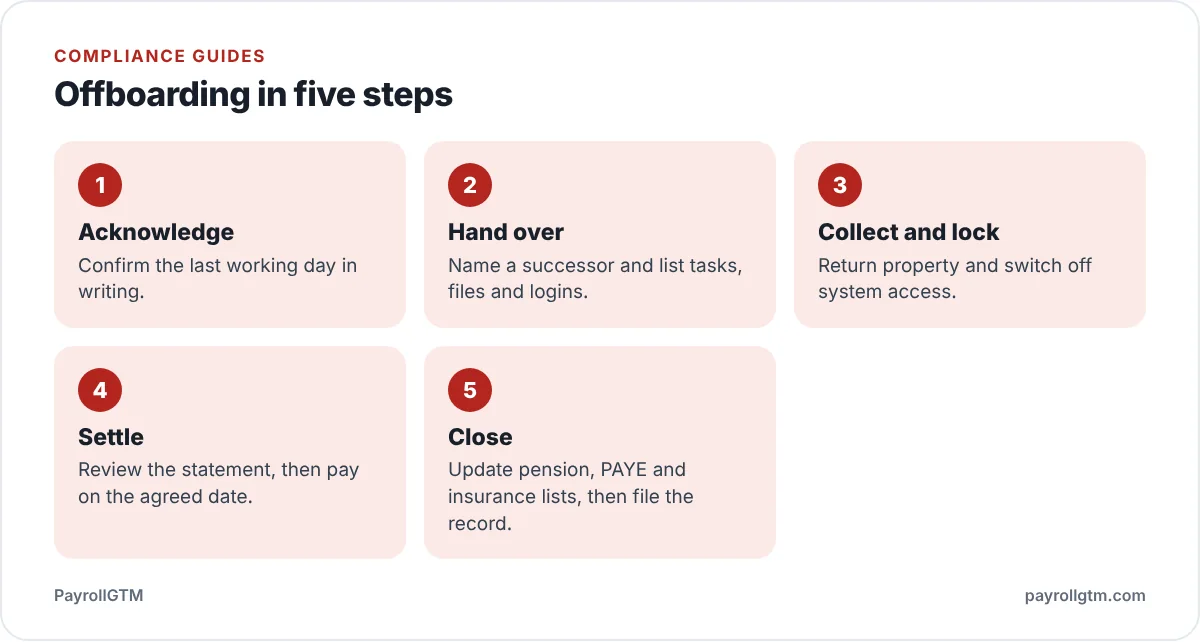
Acknowledge the resignation in writing and fix the last day. Agree the handover list with a named successor. Collect company property against a signed checklist, and switch off email, system and bank approvals on the last day (earlier for sensitive roles). A second person should review the settlement statement before payment. Pay on the date in the contract, or by the next normal pay date. Our acceptance letter and exit interview templates help with the paperwork.
What to do with the statutory side
- Pension. Remit the final contribution within 7 working days of paying the last salary. The RSA stays with the employee for life; tell them to give the PIN to the next employer. See what happens to a pension when someone leaves.
- PAYE. Include the final pay in the monthly PAYE schedule and remittance, and make sure the leaver is on the annual employer return.
- NSITF and group life. NSITF follows total payroll, so the final payroll counts. Update the insured list for group life so cover and premium match headcount.
Mistakes that turn a settlement into a dispute
Five come up repeatedly. The final month is left off the pension schedule, which leaves a gap in the RSA. Leave pay is treated as non-taxable. An advance is deducted with no signed consent. The payment is late because nobody owns the date. And the working is lost, so nobody can show how a figure was reached. A one-page settlement statement signed by both parties fixes most of these. If the employee disputes one figure, pay the undisputed amount on time and discuss the rest in writing.
Holding final pay until a laptop is returned is risky. Agree a return date and, if you plan a deduction, document the legal basis first. Errors found after payment are handled as corrections: see back pay and salary corrections.
What the settlement statement should show
Keep it to one page that the employee can check line by line. List each earning with its working (for example, "leave pay: ₦360,000 / 30 x 7 days"), each deduction with its basis (PAYE, pension, the advance agreement and its date), and the net amount with the bank details it is paid to. Add the last working day, the notice served or paid, and a line for the employee's signature. If the employee refuses to sign the clearance form, note that it was offered, record the refusal, keep the evidence and still pay what is undisputed. This one page is also what you show an auditor, and it feeds the payroll records you keep for the employee file.
Different kinds of exit
Dismissal for misconduct
Follow a fair process first (queries, suspension and fair hearing). Even after dismissal, pay the salary earned and any entitlement that is due, subject to lawful deductions.
End of a fixed term
Confirm in writing that the contract is ending, and pay what the contract provides, including any end-of-term benefit.
Death in service
Pay final entitlements to the person entitled under the law, notify the insurer under the group life policy, and help the family with the PFA paperwork.
References
You are not obliged to give a detailed reference. A factual note of dates and job title is low risk. Keep anything more to what you can prove.