The sequence is: gather the facts quietly, put the allegation in a written query, read the reply with an open mind, hold a hearing for anything serious, decide in writing with reasons, and allow an appeal. Skipping steps is how an employer with a genuine case ends up paying damages at the National Industrial Court.
Take a realistic start. Hauwa runs a pharmacy in Abuja. Her stock count shows ₦48,000 missing from Friday's takings, and the till clerk, Segun, closed that shift. Hauwa wants to sack him on Monday morning. She would very likely win on the facts and lose on the process, because Segun has not been told what is alleged or been allowed to answer. This guide shows what she should do instead.
Why the process matters
An employee can be dismissed for good reason and still win a claim because the employer skipped the steps. Where your contract or handbook promises a procedure, the court looks at whether you followed it, and at whether the employee was told what was alleged and given a real chance to respond. Employment disputes go to the National Industrial Court (NICN), which has exclusive jurisdiction over labour matters. A documented, fair process also makes it far easier to show that you acted reasonably. For the court side, see wrongful dismissal and the National Industrial Court.
One caveat: the Labour Act's definition of "worker" excludes some administrative, executive, technical and professional staff in some respects, so senior staff are governed mainly by their contracts and common law. The fair approach below still applies to them in practice. Check specifics in our guide on managers and professionals.
Start with a written policy
Keep it short. Say which behaviour is minor misconduct (lateness, dress code) and which is serious (theft, fraud, violence, harassment, serious negligence, breach of confidentiality). List the possible outcomes from a verbal warning to dismissal, and who decides. Put it in the employee handbook, refer to it in the contract and keep a signed acknowledgement. A rule that was never communicated is hard to enforce.
Step by step: query to appeal
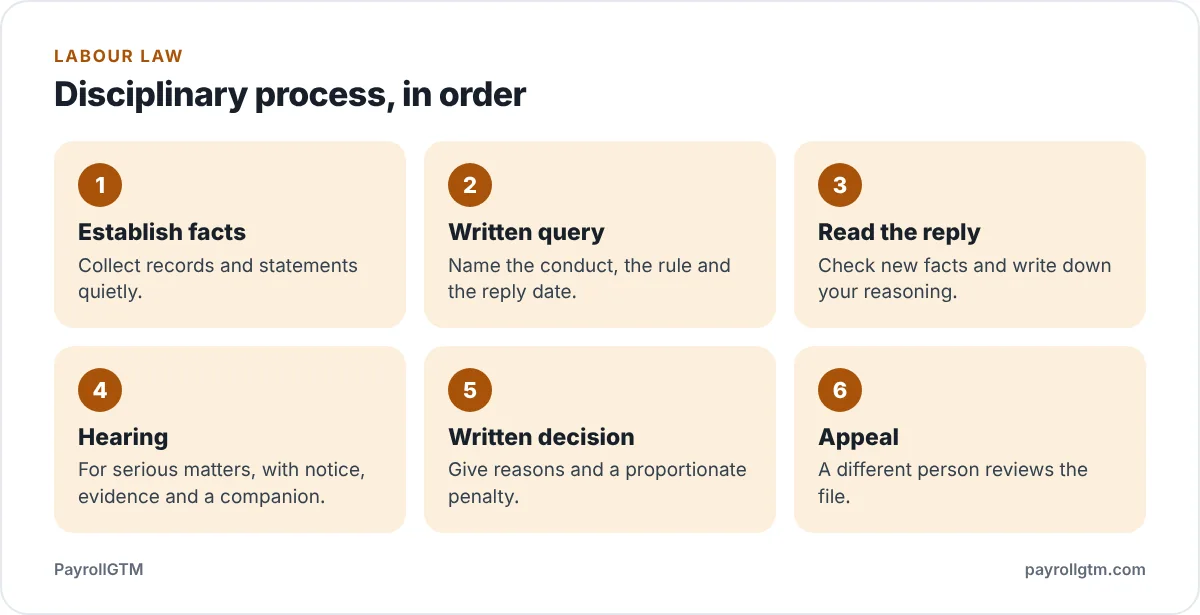
1. Establish the facts quietly
Collect till reports, CCTV where lawful and relevant, messages and the shift roster. Speak to the people involved separately and take notes. Do not discuss it around the office, because gossip contaminates evidence and reputations. In Hauwa's case she checks the till roll, who else had access that Friday, and whether the count was done by two people.
2. Issue a written query
A query asks the employee to explain specific conduct. State the date, time and place, describe the allegation in neutral words, name the rule or contract term that may have been breached, and give a reasonable period to reply in writing, often 24 to 72 hours. It is a request for an explanation, not a verdict. Deliver it in a way that leaves a record: hand delivery with a signed copy, or email with confirmation. A sample is in query and warning letter templates.
3. Read the reply
Sometimes the explanation closes the matter. Sometimes it raises facts to check, such as a second person who had the till key. Sometimes it admits the conduct but shows mitigating circumstances. Write down your reasoning at this stage.
4. Hold a hearing for serious matters
For anything that could lead to a final warning or dismissal, invite the employee in writing. Give reasonable notice, restate the allegations, enclose the evidence you will rely on and allow a colleague to accompany them. The panel should include someone not involved in the incident, ideally two people. Let the employee respond, call witnesses and show documents. Take minutes and let the employee read and sign them or note disagreement.
5. Decide in writing, in proportion
Ask three questions. Did the conduct probably happen? Does it breach a rule or the contract? Is the penalty proportionate to the seriousness, the employee's record and how others were treated? Treating similar cases differently without reason is one of the most common grounds for complaint.
6. Allow an appeal
Someone who was not on the original panel looks again. In a very small business this may be the owner reviewing a manager's decision. Keep it short: the employee states grounds, the reviewer reads the file and gives a written outcome.
Warnings: use a ladder
| Level | Typical use | Record |
|---|---|---|
| Verbal warning | Minor first offences | File note signed by the manager |
| Written warning | Repeat minor or moderate offences | Letter on file |
| Final written warning | Serious misconduct short of dismissal, or repeated offences | Letter stating that further breach may lead to dismissal |
| Dismissal | Gross misconduct, or failure after a final warning | Letter with reasons and appeal route |
State how long each warning stays active (six to twelve months is common practice) and what improvement you expect. For lateness specifically, an attendance and lateness policy keeps managers consistent.
A sample timeline
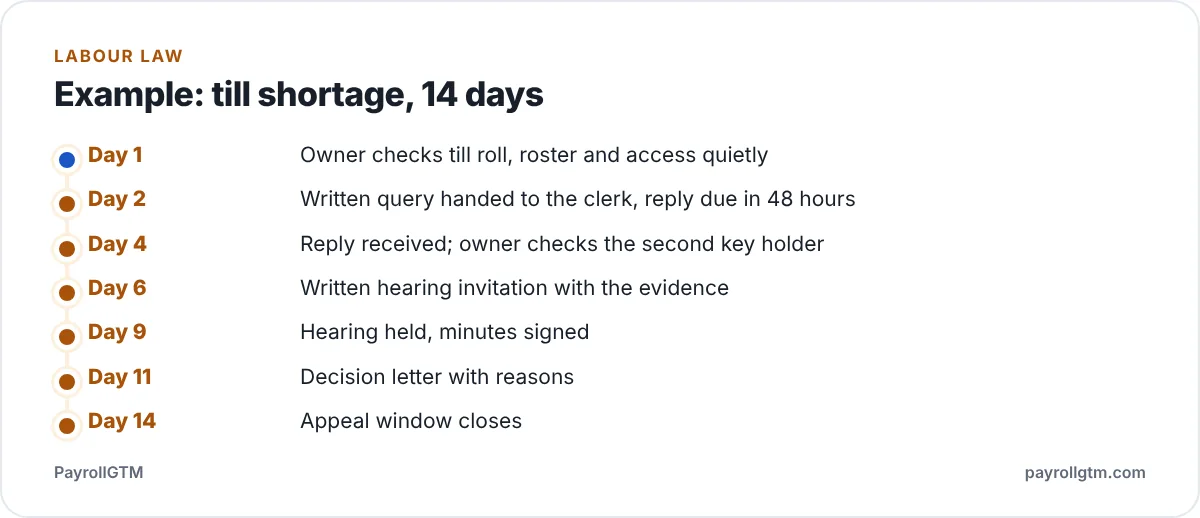
Here is how Hauwa's case could run over two weeks, with every date in writing.
Suspension: use sparingly
Suspension may be needed while a serious allegation is investigated, for example where the employee could interfere with evidence or safety is at risk. It is not a punishment. Keep it as short as possible, put the reason and expected length in writing and say it is not a finding of guilt. Whether it is paid depends on the contract and the law, and suspending without pay carries more risk. If your contract has no clause allowing unpaid suspension, take advice before choosing it. The wider rules on pay are in wage payment and lawful deductions.
Dismissal and final pay
Where dismissal for gross misconduct is justified, give the decision in writing with reasons and the appeal route. Pay what has already been earned, such as salary to the date of dismissal and any untaken leave your contract treats as payable, even in a misconduct case. Holding final pay as a penalty can create a separate claim. Whether notice or pay in lieu is due in a summary dismissal depends on the contract, so check it. The notice floors and options are in termination notice and severance, and the final pay steps in offboarding and final settlement. The wider duties of an employer are in the Labour Act employer obligations guide.
Common questions
Can I dismiss someone immediately for theft?
You may have grounds for summary dismissal, but you cut risk sharply by giving the employee a chance to answer first.
Is a query a warning?
No. A query asks for an explanation. A warning is a penalty imposed after the facts are established.
What if the employee will not attend the hearing?
Invite them again in writing, say that the hearing may proceed without them, and then decide on the evidence.
Should I call the police?
You can report a suspected crime. The disciplinary process is separate and should still be fair. For serious cases, a lawyer should review your steps.
This is general information, not legal advice.