Disputes over firing someone in Nigeria go to the National Industrial Court of Nigeria (NICN), which has exclusive jurisdiction over labour and employment matters under section 254C of the Constitution. A private employer can generally end a contract by giving the notice the contract requires, or paying in lieu of it, without proving a reason. What gets employers into trouble is skipping a process that the contract, handbook or a statute promised, or dismissing someone for a reason the law protects. This guide helps you decide which route you are on and what to put on paper first. It is general information, not legal advice, and a dispute worth contesting needs a lawyer who practises before the NICN.
What "wrongful" means in practice
There is no single offence called wrongful dismissal that a form can be ticked for. A claim is usually one of these.
- Breach of the contract's own terms. You gave less notice than the contract says, ignored a disciplinary procedure in the handbook, or did not pay what was due at exit.
- Breach of a statute. The dismissal is tied to something the law protects. Pregnancy and maternity leave are a typical area of risk in a small business (see maternity leave in Nigeria), and union membership or activity is another. Ask a lawyer how the specific protection applies before acting.
- Unfair process. A summary dismissal for alleged misconduct where the person was never told the allegation or heard.
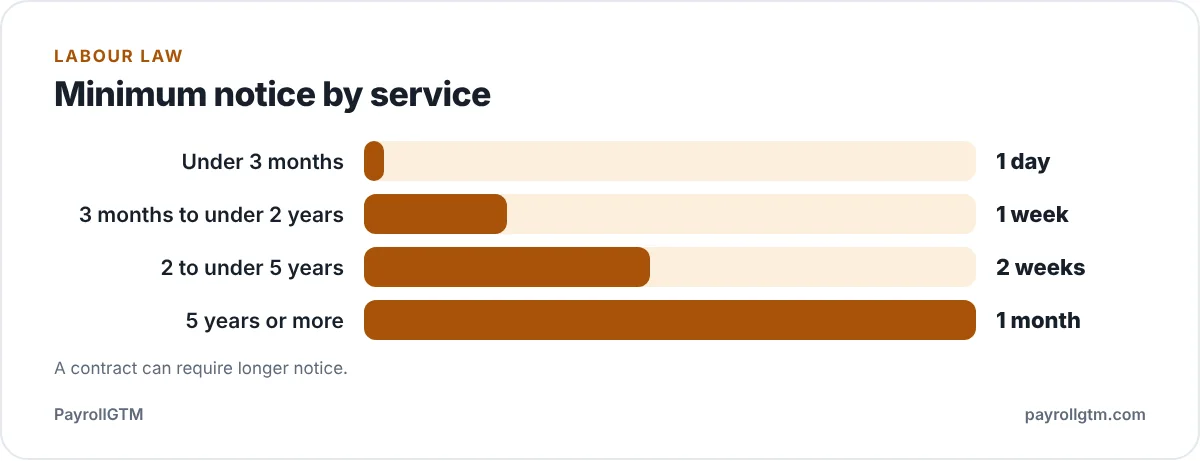
Employment in Nigeria is mainly governed by the contract. Where the contract is silent on process, the statutory minimum notice in the Labour Act applies: 1 day if employed for less than 3 months, 1 week for 3 months to under 2 years, 2 weeks for 2 to under 5 years and 1 month for 5 years or more (s.11). Pay in lieu is allowed, and a contract can give longer notice. Termination notice and severance has the details. Whether the Act covers a particular senior manager or professional is a separate question, discussed in does the Labour Act cover managers and professionals, and the answer changes which rules the court starts from.
Notice, pay in lieu and summary dismissal are different things
Employers often blur these, and the difference decides the bill. Notice means the employee works (or stays on payroll) through the period. Pay in lieu means you end the job immediately and pay what the notice period would have earned. Summary dismissal means ending the job with no notice at all because of serious misconduct, which is only safe when the contract provides for it and you have a fair, recorded basis for the finding. Summary dismissal that later fails turns into a missed-notice claim plus whatever else the court adds. Calling a performance problem "gross misconduct" to avoid paying notice is the shortcut most likely to backfire, because the handbook's own definition of gross misconduct will be read against you. Probation does not remove all of this: even a short probation usually carries a notice term, so check probation rules and confirmation before you assume none is owed.
Which route are you on?
Work through this before the conversation with the employee, not after it.
| Your situation | Route | Main risk if mishandled |
|---|---|---|
| Performance or fit problem, no serious misconduct | Terminate with notice or pay in lieu, after documented warnings where your policy requires them | Short notice, or an inconsistent reason given to different people |
| Alleged misconduct (theft, fraud, serious insubordination) | Query, investigation, hearing, then a decision in writing. Dismissal without notice only if the contract allows it for that conduct | No hearing, vague charges, a decision made before the person answers |
| Role no longer needed | Redundancy procedure under Labour Act s.20 (see redundancy in Nigeria) | Picking individuals for personal reasons and calling it redundancy |
| Fixed-term contract reaching its end | Let it expire, or renew in writing | Repeated renewals that look like a permanent job being treated as temporary |
| Employee is pregnant, on leave, or has raised a complaint | Pause. Take advice before any step | The reason looks tied to a protected circumstance |
What a claimant typically asks for
We will describe this at the level of principle, because outcomes depend on the facts and the judge. Typically, a claimant asks for a declaration that the termination was unlawful, payment of what the contract entitled them to (notice pay, unpaid salary, accrued leave and other benefits) and damages. Where the contract allowed termination on notice, the starting point for loss is often the notice period that should have been given, and a larger award usually needs a breach of statute or a serious procedural failure to support it. Courts can look at the overall fairness of the process, so a technically legal exit handled badly can still cost you more than the notice pay.
Ibrahim has worked for a logistics firm in Kano for six years on ₦400,000 a month. His contract asks for one month's notice from either side. Management tells him on a Friday that he is dismissed with immediate effect for "poor attitude" and pays him to the end of the month, with no warning on file and no meeting.
A notice-based claim would start from the missing month: ₦400,000. Add any unpaid leave allowance or other accrued sums, which depend on his contract. If a handbook promised a disciplinary hearing before dismissal and he can show he never had one, his lawyer will argue for more than that. What the court would award is for the court. For the employer the lesson is cheaper than the lawsuit: giving the month's notice or paying it in lieu would have closed the main exposure on day one.
How to lower the risk before you dismiss
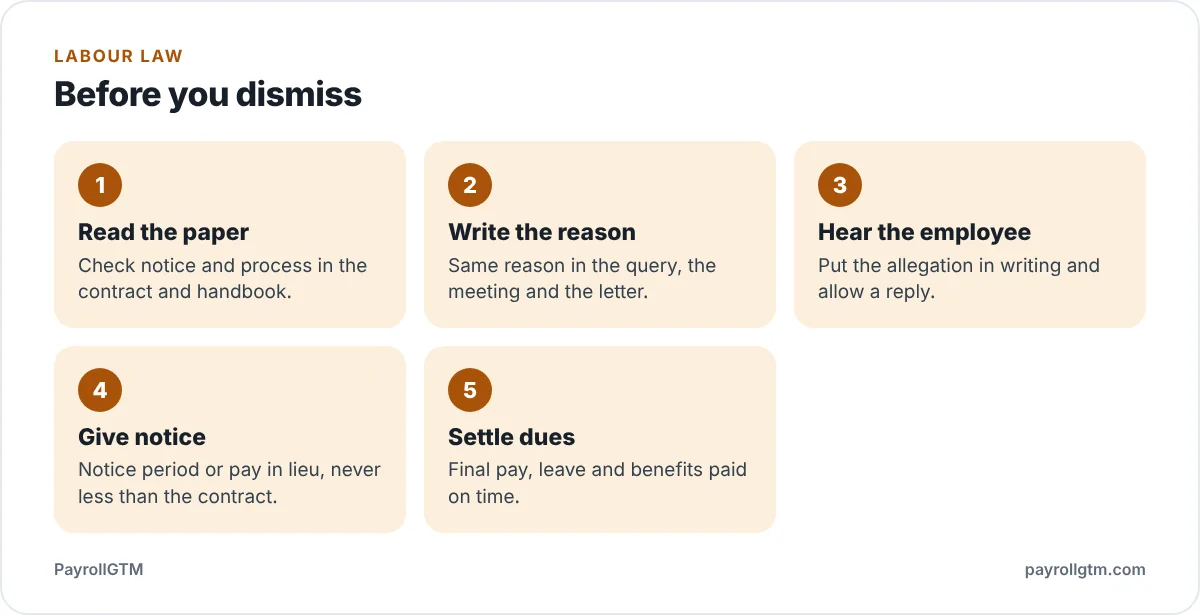
- Read the contract and handbook first. What notice does the contract require, and what process do you promise? Follow your own paper. What an employment contract should contain is a good check on yours.
- Write down the reason and keep it consistent. The letter, the reason you gave verbally and the reason you give HR should be identical.
- Put the allegation in writing and give time to reply. A fair query and hearing are covered in the disciplinary procedure guide, and template wording is in query and warning letter templates.
- Treat comparable cases alike. If lateness got a warning for one person last year, dismissing another for the same thing needs a documented difference.
- Pay everything that is due, on time. Final salary, pay in lieu, leave days owed and any statutory contributions. Offboarding and final settlement explains the settlement, and an unpaid employee has an easy claim.
- Keep the file. Warnings, minutes, signed acknowledgements and the dismissal letter.
If the employee has already sued, or threatens to
Do not argue by text message and do not delete records. Gather the contract, handbook, letters and payment proofs, and speak to a lawyer who handles NICN matters promptly, because there are filing procedures and time limits that we have not set out here and will not guess at. Many disputes settle before judgment, and a settlement on paper that clearly states what was paid and for what is better than an open-ended argument. An employee who resigned has fewer claims than one dismissed, but a forced resignation can be argued as a dismissal, so how the exit was reached matters (see how to resign in Nigeria). The NICN website is the place to check current rules of court.