A CAC annual return is a yearly filing that tells the Corporate Affairs Commission your registered business is still alive and who is behind it. Skip it and nothing happens on day one, but the default builds up: late-filing charges, a flagged record at the bank, and in the end a risk of being struck off the register. This guide covers what we can say with confidence. We deliberately give no deadline days or naira penalty amounts, because those depend on your entity type and CAC's current schedule, so confirm them with CAC or an accredited filer.
What is a CAC annual return?
It is a statutory filing made with the Corporate Affairs Commission, separate from any tax return. For a company it confirms current particulars such as the registered address, directors, secretary, shareholders and share capital, and it is normally accompanied by the company's financial statements. A registered business name files a simpler return, and the information asked for differs by entity type, so look at the form CAC gives you for yours rather than copying what a friend's company filed.
The return does not pay tax and does not replace your tax filings. It is a record-keeping duty owed to the Commission. If you are mixing the two up, our note on the statutory basics beyond CAC shows which body wants what.
Why does it matter if my business is small and barely trades?
Because other people check the register, not you. Four situations come up again and again:
- Banking. A bank reviewing an account or a loan can ask for evidence that the company is in good standing with CAC.
- Tenders and supplier onboarding. Procurement teams often ask for CAC documents and proof the entity is compliant before they register you as a vendor.
- Director standing. Directors of a company in default can be personally affected. Ask a lawyer what applies to your particular directors.
- Other regulators. A PenCom compliance request or an audit by a tax office will usually start from your registration details. See how the PenCom compliance certificate works for the pension side of this.
A dormant or part-time business still has the duty. Having no income changes what the accounts say, not whether a return is owed. Ask CAC what a nil or inactive entity should file, because the answer depends on the entity type.
What actually happens if I do not file?
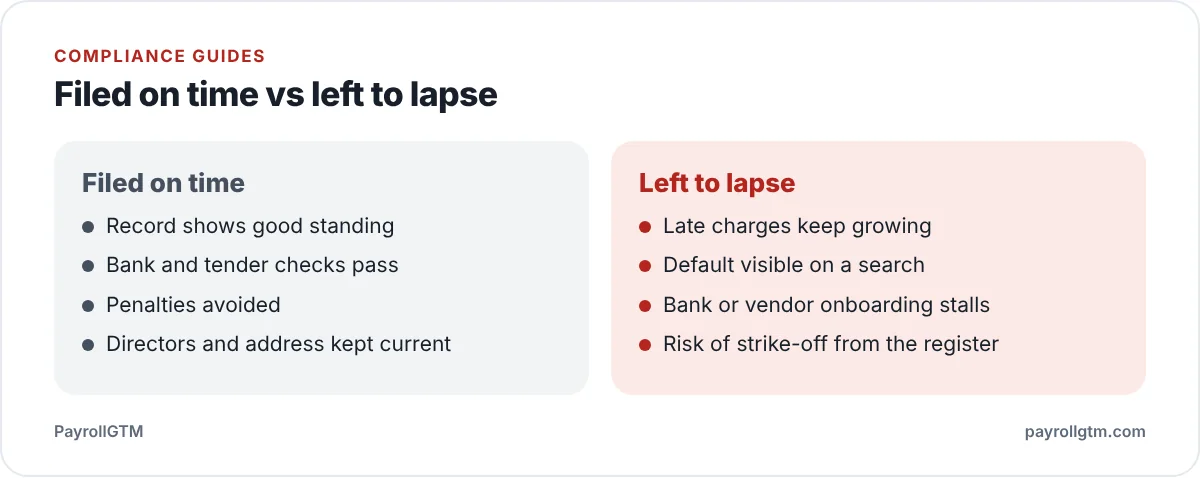
In principle, three things stack up over time.
- Penalties accrue. CAC charges late filing penalties under the Companies and Allied Matters Act 2020 and its own fee schedule. We do not quote amounts because we have not verified the current schedule. The practical point is that the charge grows the longer you wait, so a two-year gap costs far more than filing next month.
- Your record shows a default. A search on the entity can reveal outstanding returns. That is the moment a bank officer or a procurement panel decides you are a risk.
- Strike-off risk. The law allows the Commission to remove a company from the register where it appears to be no longer carrying on business or is in persistent default. Once struck off, the entity loses its standing, and getting it restored means going through CAC's restoration process, which costs time and money. Ask CAC what that process requires for your case.
What should I prepare before filing?
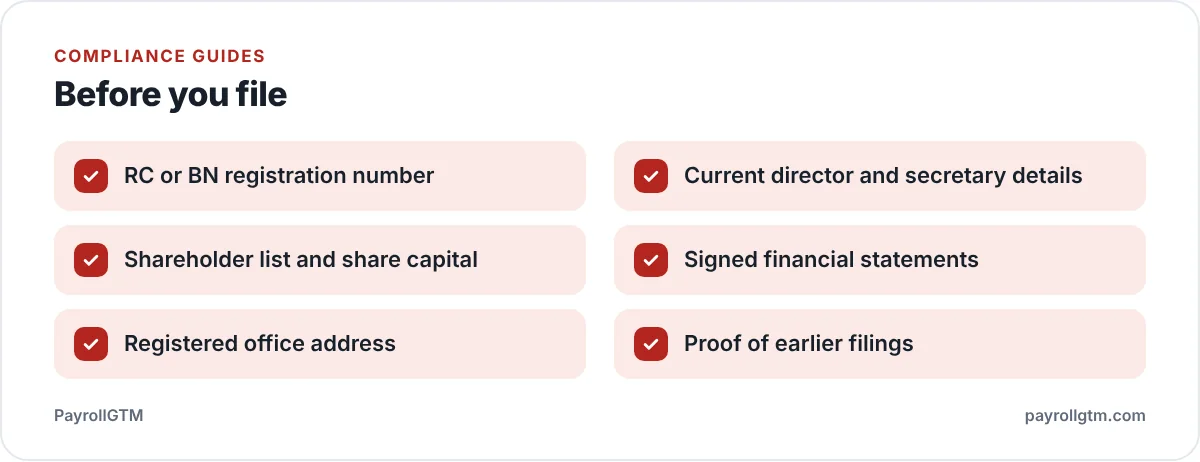
Gather these first so the filer is not chasing you:
- Your certificate of incorporation or registration number (RC or BN number).
- Current names, addresses and means of identification of directors, the company secretary and shareholders, including any changes since the last filing.
- The financial statements for the period, signed off as the filing route requires. A small company still needs figures that add up, even if the year was quiet.
- The registered office address and an email and phone number CAC can reach.
- Proof of any earlier filings, so that a gap in the record can be explained rather than rediscovered.
Your financial statements are only as good as your bookkeeping. If the payroll lines are a mess, the return will be too. A tidy monthly reconciliation, as described in the common payroll mistakes list, saves a lot of back-and-forth at year end.
What mistakes do small businesses make with annual returns?
- Assuming the registration agent handles it for ever. The person who registered you in 2021 is not automatically filing in 2024. Ask in writing who is responsible, and get their reply.
- Letting details go stale. A director resigns or the shop moves from Ikeja to Lekki, and nobody tells CAC. The next return then has to correct the history as well as report the new year.
- Treating a business name like a company. They are different entity types with different forms. A sole trader who later incorporates must not assume the old filings carry over to the new company.
- Using the filer's email as the record. Always ask for the filed return and the acknowledgement, and store them with your other compliance papers.
- Waiting until a bank asks. Compare a quiet month to a loan application week: the first is cheaper and calmer.
Can I file it myself, or do I need someone?
CAC runs an online filing portal, and filings are generally made through it, with accredited filers (lawyers, chartered secretaries and accountants registered with the Commission) able to submit on your behalf. Whether you can do it yourself depends on your entity type and whether the portal lets you act directly. We do not give portal addresses or fees. Start from the root site, cac.gov.ng, and confirm the current steps there.
If you use an accredited filer, put three things in the engagement email: which years are outstanding, the price for the whole job, and the day you will get the filed copies. Keep those copies. An email saying "we filed" is not evidence.
Does a clean CAC record help with payroll compliance?
Indirectly, yes. The same registration details sit behind your tax registration, your pension compliance and your levies, and a mismatch (an old address, a director who left in 2022) tends to surface when an official asks for documents. The new unified Tax ID system, announced by the NRS in May 2026, is reported to use the CAC RC number for businesses, which makes a correct CAC record more important. Check the latest NRS notice for how that works.
Before an audit visit, put the CAC filing history in the same folder as your PAYE, pension and levy proofs. Our guide to preparing for a payroll tax audit lists what else belongs there, and the employer registration checklist covers the registrations that sit next to it.
What is a sensible routine?
Put the CAC return in the same calendar as your payroll dates. Ask CAC or your filer for the due date that applies to your entity, enter it with a reminder a month earlier, and review directors and addresses at the same time. If you have staff, the neighbouring items are the pension remittance, the group life policy renewal and the ITF payment, so one quarterly sit-down with your accountant can cover them together.
If you have already missed years, do not wait to file a perfect set. Ask the filer for a written list of what is outstanding and what it will cost, then clear the oldest first.